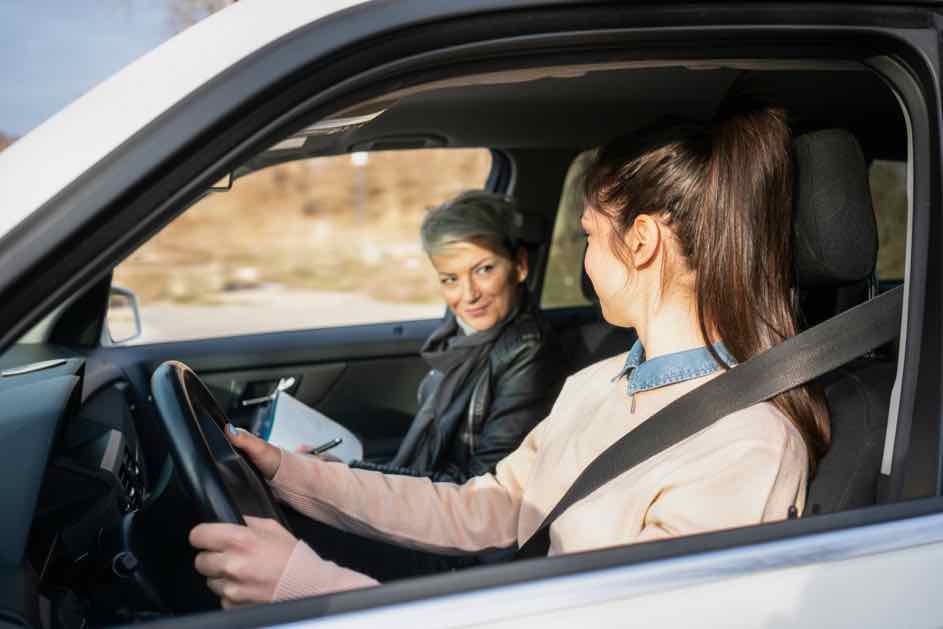
Private supervised practice drives are an ideal complement to lessons with your driving instructor. We explain everything you need to know.
In Switzerland a learner driver covers around 1’000 kilometres on average before sitting the practical driving test. That takes around 35 hours, privately and with the instructor combined. Because new drivers have a four to five times higher accident risk in the first three years after the test, the Swiss Council for Accident Prevention (BFU) recommends covering at least 3000 km, or 100 hours, as a learner driver. Private practice drives are therefore doubly worthwhile: they reduce the cost and they lower the risk of an accident.
This video shows how a first private practice drive can go!
Should I learn in an automatic or with a manual gearbox? A question every learner driver has to answer. To make the right decision you have to weigh up several things. You can find out which in the blog article «Learning to drive manual or automatic»
01
Should I practise privately before my first driving lesson?
Rather than having to unlearn a bad habit later, it is better to do without private practice drives before your first lesson. Your instructor simply knows better and will explain all the routines and every function and setting in and on the car correctly. Afterwards you can repeat and deepen what you have learned on a private supervised practice drive. If you are learning in a manual, it is worth considering doing a few laps of an empty car park. You can gather your first impressions and get a little familiar with the biting point. But do not forget that the biting point is different in every car.
02
What criteria does a supervisor have to meet?
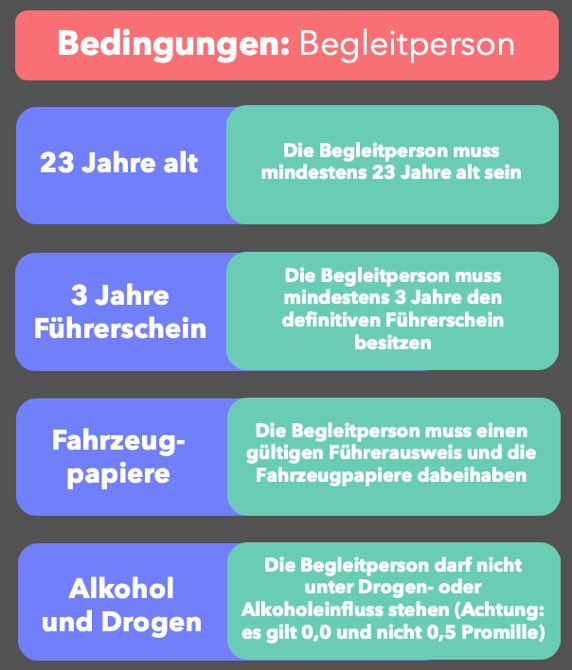
By law, your supervisor for private practice drives has to meet several conditions:
- They have to be at least 23 years old
- They have to have held the full driving licence for at least 3 years
- They have to have a valid licence and the vehicle papers with them
- They must not be under the influence of drugs or alcohol (note: the limit is 0.0, not 0.5 per mille)
It is an advantage if your supervisor knows you well. That usually applies to parents, siblings, neighbours or a close friend. That way there is mutual trust and the person knows how you react in stressful situations. Your supervisor should be an experienced and considerate driver, not prone to outbursts and good at explaining things. Anxious types and people who are quickly out of their depth will not give you the confidence you need.
03
What should I practise on private drives?
Private practice drives are solely about deepening what you learned in your lessons and turning it into habit. So practise individual manoeuvres, for example parallel parking or reversing over a longer stretch. You will be better prepared for your lessons with your instructor and will of course be able to discuss and agree the content of your private drives with them.
Practise, practise, practise: as this video about private practice drives shows!
In the blog article «Practising driving» you will find a whole collection of important topics you can practise.
Important: your private supervisor has their own driving style and learned some things differently. Stick strictly to what your driving instructor tells you. Only they are a trained professional and know what applies.
04
And during the drive?
How you prepare and what you watch out for before the practice drive determines how well it goes. Concentrate on the following points during your private practice drives:
- Your supervisor has to have easy, immediate access to the handbrake at all times. Note: a parking brake positioned to the left of the driver does not satisfy this requirement!
- The blue L has to be clearly visible and fixed to the rear of the vehicle.
- Taking further passengers along is in principle permitted. But bear in mind that every extra «passenger» is a potential disturbance and can distract you while driving.
05
May I drive abroad with my Lernfahrausweis?
No. Your Lernfahrausweis is valid only in Switzerland. If you still want to practise abroad, you have to ask the relevant embassy (or its consular representation) or the customs authorities of the country concerned about the rules that apply.
If you drive in another country anyway without checking, you are taking a big risk. In an accident you are, as a rule, not insured.
06
What is forbidden during private practice drives?
In principle everything that complies with the traffic rules is allowed. What is forbidden is any practice manoeuvre on busy roads, so for example turning, hill starts, parallel parking, longer stretches of reversing and so on.
Details like these and further rules are laid down in the Road Traffic Act (SVG), in the Traffic Rules Ordinance (VRV) and in the Road Traffic Licensing Ordinance (VZV).
07
Who is liable on private practice drives?
Your supervisor is responsible for ensuring that safety is guaranteed at all times and that you keep to the traffic rules. If that duty is breached, the supervisor is held to account. But the driver is liable as well when they disregard the traffic rules. So getting caught by a speed camera and then claiming that your supervisor failed to point out the speed limit is unlikely to be accepted.
08
Insurance on private practice drives
For practice drives with a third party you should take out insurance for driving other people’s cars. For learner drives with a parent it is advisable, in the case of a newer vehicle, to take out collision cover as well as partial cover. If you cause an accident and are under 25 years old, an excess of 1’000 francs usually applies, for third-party as well as fully comprehensive claims. To be safe, ask your insurer about your cover.
For your supervisor, normal third-party insurance is entirely sufficient. But it is worth checking before the first drive whether learner drives were excluded when the policy was taken out, in order to save on premiums.
09
Safety on private practice drives
It is important that you are aware of the dangers. Young new drivers in particular are often involved in road accidents, as the newspaper 20 Minuten writes in an article. The BFU (Swiss Council for Accident Prevention) has therefore launched a campaign to improve safety. The core message of that campaign is that every learner driver should practise for at least 3000 hours. For many that is not easy, because they have no opportunity to practise privately at all.
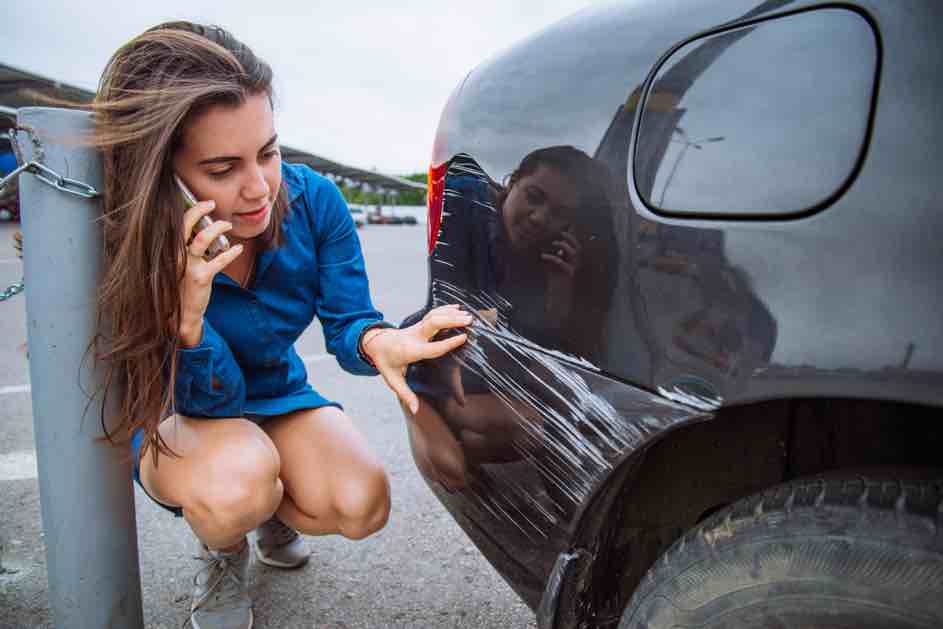
Chantal S. was finally allowed out on the road after 100 driving lessons and five instructors. And yes, it cost a great deal. Read it here at Watson.
We have put together a detailed checklist for the road to your driving licence in the blog article «Detailed driving licence checklist».